





- 98% satisfied customers
- 72h delivery
- 30 dni na zwrot

Adjustable reamer 46-56 mm NRZe
15034
€119.76 tax inc.
Net price: €97.37
Description
Adjustable reamer 46-56 mm – reamer adjustable to 55 mm
Technical data – HSS blades, shank with square drive for a tap wrench
| Technical data | |
|---|---|
| Adjustment range | 46–56 mm |
| Designation | NRZe to PN |
| Blades | HSS, in inclined grooves |
| Diameter adjustment | two nuts |
| Shank diameter | 30.0 mm |
| Shank square | 23.7 mm |
| Overall length | 230 mm |
| Blade length | 106 mm |
| Drive | tap wrench |
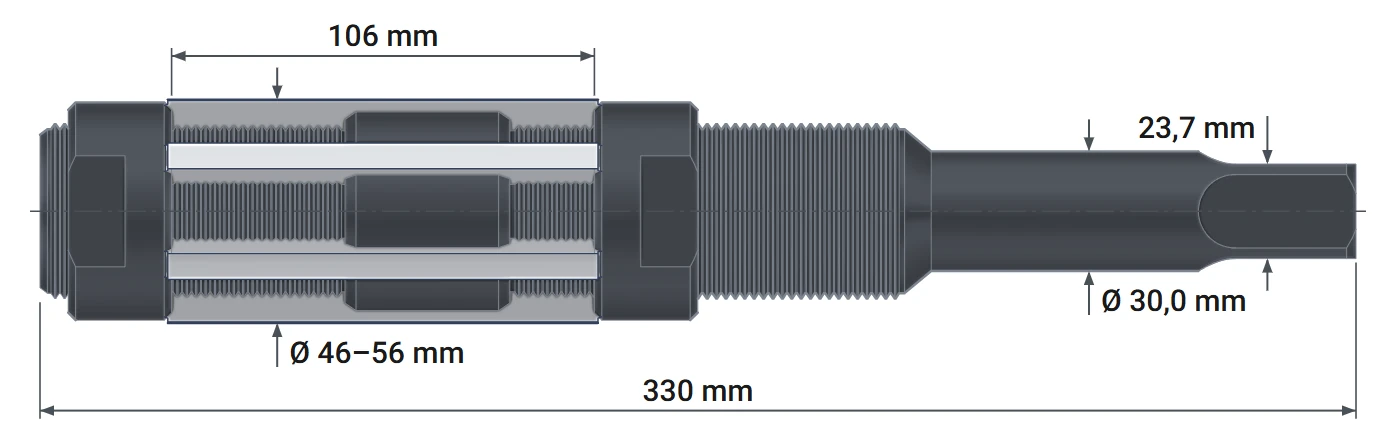
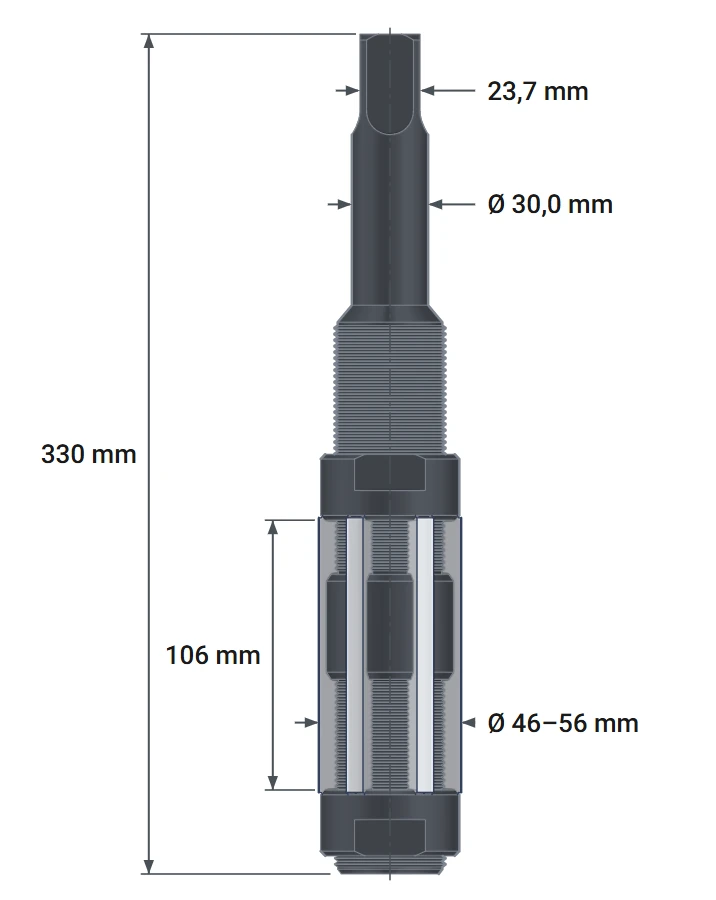
Adjustable reamer 46-56 mm The NRZe finishes holes from 46 to 56 mm, including the full 55 and 56 mm sizes. Set the diameter with two nuts that move the high-speed steel (HSS) blades along inclined grooves in the body. The shank measures 30 mm, and the square measures 23.7 mm. The drill bits offered in this range come in 0.5–1 mm increments, so bore the preliminary hole with an allowance of 0.05 to 0.15 mm. Operate it by hand with a tap wrench fitted over the square on the shank.
Manufacturers design adjustable blade reamers for repair and assembly work. They are useful wherever a hole needs to be fitted to the part at hand. The diameter is then set to the size of the part, rather than to the standard size series of fixed reamers.
Which size to choose: 46-56 or 45-54 mm
Both reamers cover holes from 46 to 54 mm. The 45-54 mm reamer starts at 45 mm, while this one extends to 56 mm. This one also has a larger shank, 30 mm compared with 25 mm, and a 23.7 mm square compared with 18.5 mm. From 56 mm, the 56-70 mm reamer takes over the range.
How diameter adjustment works – blades and two nuts
NRZe reamer construction and measuring the diameter setting
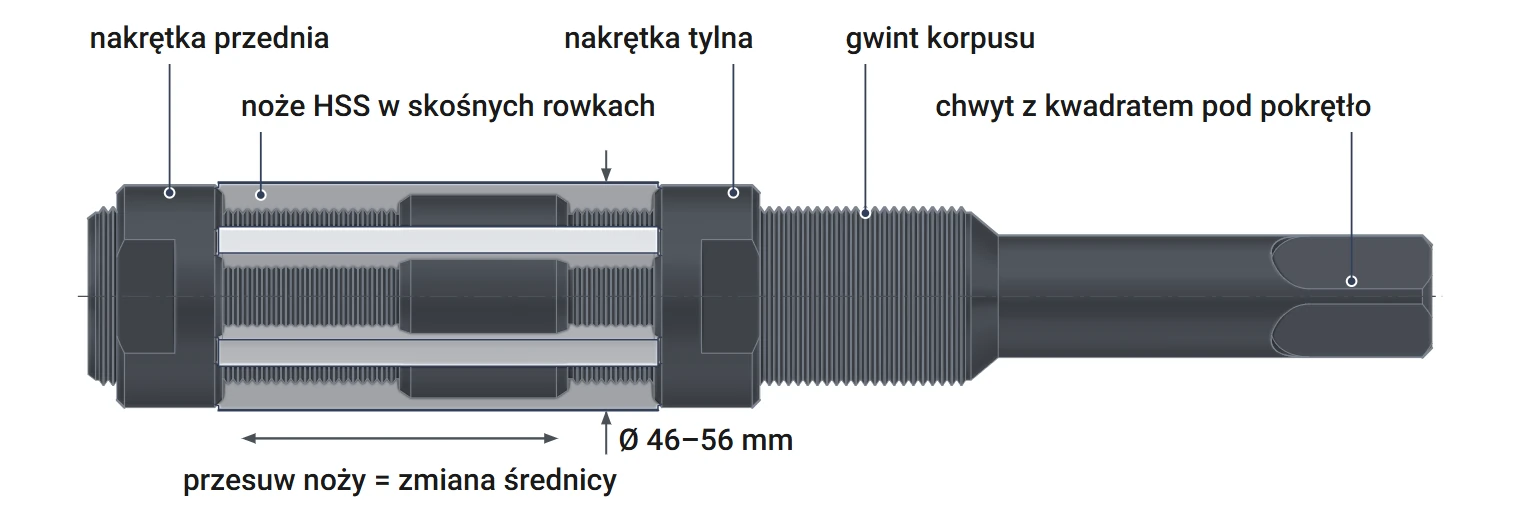
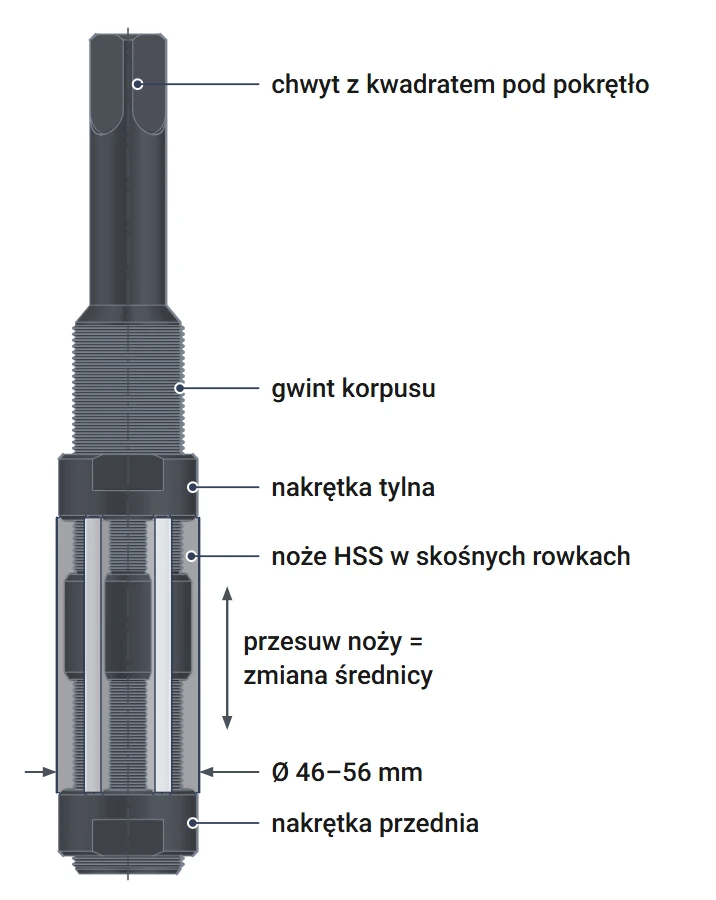
The body has inclined grooves around its circumference, each holding an HSS blade. Two nuts, front and rear, retain the blades at both ends. Moving the blades along the grooves moves their cutting edges away from or toward the axis. This changes the cutting diameter over a range of 10 mm, from 46 to 56 mm. This is why the tool is also called an adjustable reamer.
Adjustment in three steps
First, loosen one nut. Then tighten the other — the blades will move to the new diameter. Finally, lock the blades by tightening the first nut. The rear nut, on the shank side, provides the main clamping force; the front nut is only snugged up. Tighten carefully. Excessive force bows the blades outward and causes the reamer to catch in the hole.
How to measure the set diameter
With an even number of blades, measure the diameter across two opposite blades using a micrometer. With an odd number, a groove lies opposite each blade, so the micrometer will read too low. In this case, use a setting ring or a hole of known diameter. Insert the reamer and expand the blades until they contact the hole wall.
How to ream step by step – tap wrench and clockwise rotation
Guidelines for using an adjustable hand reamer
Insert the reamer into the hole and apply light pressure so the blades engage the wall immediately. The tap wrench must fit the square closely to ensure smooth rotation without jerking. Align the reamer axis with the hole axis. For a longer hole, check the alignment with a square.
Hand reaming in six steps
1
Prepare the hole
0.05–0.15 mm smaller than the finished hole, e.g., 50.9 mm for 51.0 mm.
2
Set the diameter
Loosen one nut, move the blades with the other, then lock the first nut.
3
Fit the tap wrench
Fit it to the square and align the reamer with the hole axis.
4
Turn clockwise
Turn smoothly with light, even pressure.
5
Withdraw the reamer
Keep turning clockwise, including as the blades leave the hole.
✓
Check the hole
Too tight? Set a larger diameter and make a second pass.
Guidelines based on adjustable reamer manufacturers' instructions.
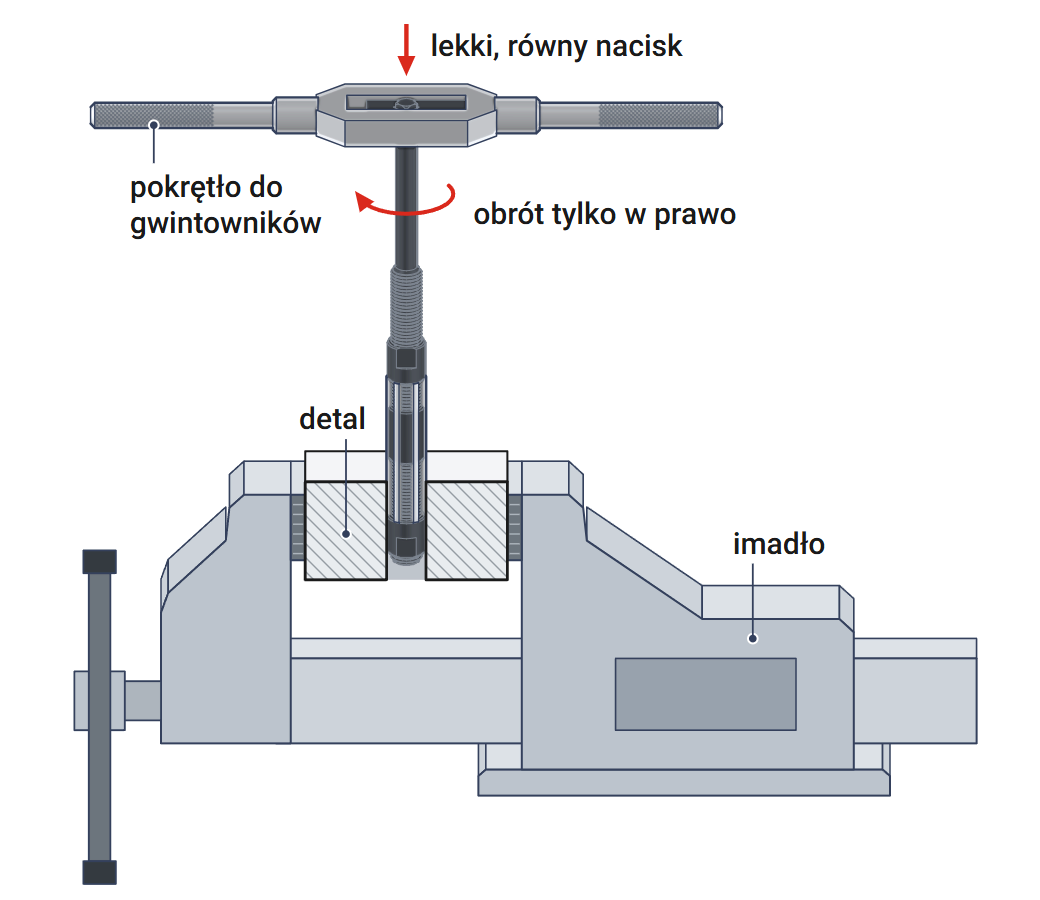
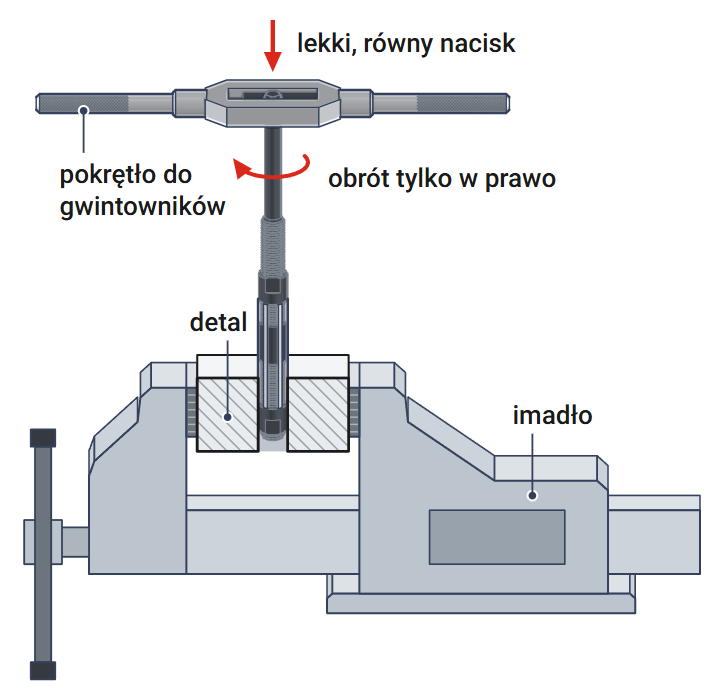
As the blades emerge from the far end of the hole, resistance drops suddenly. Reduce pressure at this point, but maintain the same turning speed. Otherwise, the reamer will jump through the end of the hole and leave it uneven.
▲
Never turn counterclockwise
Turning counterclockwise in the hole dulls the blades and may chip them. It can also loosen a nut and change the setting. Turn clockwise when withdrawing the tool as well; otherwise, you will scratch the hole wall.
How much material one pass removes
Reaming allowance and initial hole
This tool finishes a hole rather than drilling it. It removes a thin layer: from 0.05 to 0.15 mm on the diameter in one pass. A smaller allowance produces a smoother wall. Too little allowance is detrimental, as the blades rub against the wall instead of cutting and become dull faster.
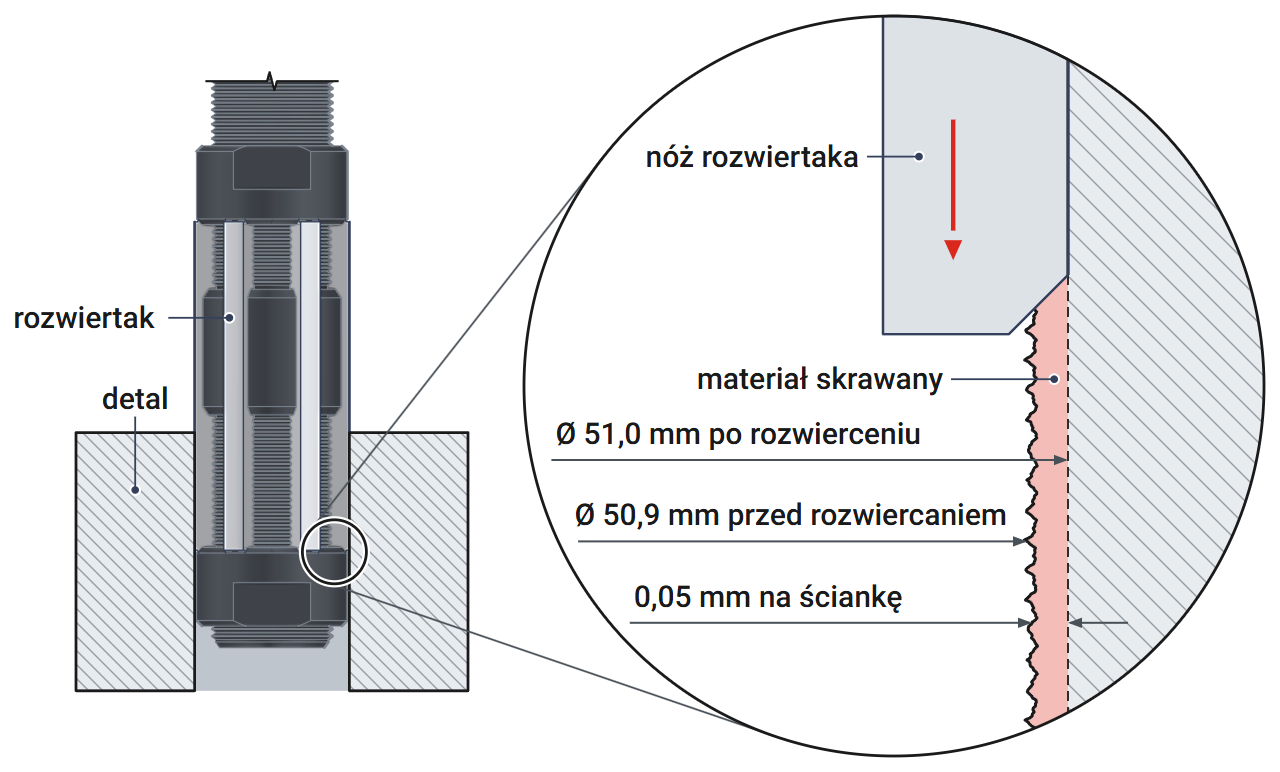
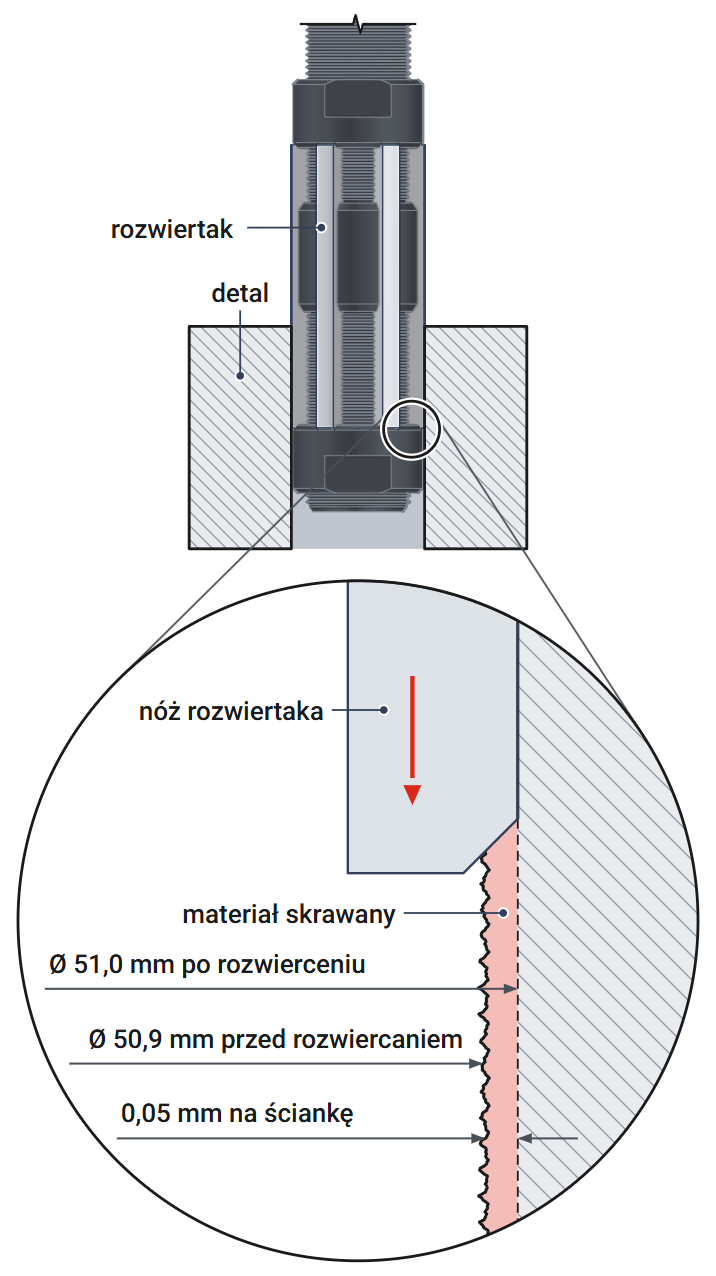
Calculation: 51 mm hole from a 50.9 mm initial hole
Allowance on diameter = finished hole diameter 51.0 mm − initial hole diameter 50.9 mm = 0.1 mm. Half of this, or 0.05 mm, is on each wall. This layer is thinner than a sheet of paper. A reamer set to 51.0 mm will remove it in one pass.
| Finished hole [mm] | Initial hole [mm] | Diametral allowance [mm] | Layer thickness at the wall [mm] | Passes |
|---|---|---|---|---|
| 46.0 | 45.9 | 0.1 | 0.05 | 1 |
| 51.0 | 50.9 | 0.1 | 0.05 | 1 |
| 51.0 | 50.8 | 0.2 | 0.1 | 2: set to 50.9, then 51.0 |
| 56.0 | 55.9 | 0.1 | 0.05 | 1 |
The available 50.5 mm drill bit would leave a 0.5 mm allowance for a 51 mm hole, more than three times the amount removable in one pass. A reamer is a finishing tool, so remove that amount beforehand by boring the hole. Remove a larger allowance from the preliminary hole, for example 0.2 mm, in two passes: to 50.9 and 51.0 mm.
Tap wrench and lubrication – what to prepare
Tap wrench for a 23.7 mm square and oil suited to the material
Tap wrench No. 7
The shank square measures 23.7 mm. Choose an adjustable tap wrench to DIN 1814, size No. 7. It accepts squares from 16 to 32 mm and fits M25–M52 taps. The smaller No. 6 tap wrench has an upper limit of 24 mm, just above the size of the reamer square.
With oil or dry
| Workpiece material | Lubrication |
|---|---|
| Steel and cast steel | cutting oil or emulsion |
| Aluminum alloys | cutting oil or emulsion |
| Gray and malleable cast iron | dry |
| Bronze and brass | dry |
Remove chips from the reamer after use. Before adjusting the blades, also clean the body grooves so the blades move evenly.
Adjustable reamer 46-56 mm The NRZe covers the full 55 and 56 mm sizes. The reamer is 330 mm long, and its blades are 106 mm long. Prepare the preliminary hole by boring, because drill bits in 0.5–1 mm increments leave too much allowance. The 23.7 mm square fits a No. 7 tap wrench for squares from 16 to 32 mm. Always turn clockwise.
Questions about size selection, pilot holes, and operation
Frequently asked questions about hand reaming
The 46-56 mm adjustable reamer covers a 55 mm hole. Prepare a preliminary hole with a diameter of 54.85 to 54.95 mm. The reamer set to 55.0 mm removes the allowance in one pass.
Either can produce holes from 46 to 54 mm. The 45-54 mm reamer also covers a 45 mm hole, while the 46-56 mm model covers holes up to 56 mm. The latter has a larger square, 23.7 mm, and uses a No. 7 tap wrench.
Clockwise, just as when reaming. Clockwise rotation protects the blades and the hole wall. It also keeps the nuts in place, so the setting does not change.
Yes, at very low speed and with plenty of oil. At high speed, the hole may end up larger than the setting. Using a tap wrench provides the best control.
Product accessories


Metal drill bit 55 NWKc HSS DIN 345 Baildon
Reference: 0453 In stock < 10 items
€136.84
€168.32 brutto

Reviews
No customer reviews for the moment.
Shipping
All orders are delivered by courier company GLS. For orders exceeding 369 PLN gross shipping is FREE
| Courier GLS | Przelew24 / Prepayment | 14,76 zł gross | Delivery time 1 working day |
| Courier GLS | Cash on delivery | 17,26 zł gross | Lead time 1 working day |
Recommended for you


This website uses its own and third-party cookies to improve our services and show you advertising related to your preferences by analyzing your browsing habits. To give your consent to its use, press the Accept button.
Cookie preferences
Functional cookiesTechnical
Functional cookies are strictly necessary to provide the services of the shop, as well as for its proper functioning, so it is not possible to refuse their use. They allow the user to browse through our website and use the different options or services that exist on it.
Advertising Cookies
These are cookies that collect information about the advertisements shown to users of the website. They can be anonymous, if they only collect information about the advertising spaces shown without identifying the user, or personalised, if they collect personal information about the user of the shop by a third party, for the personalisation of these advertising spaces.
Analytics cookies
Collect information about the user's browsing experience in the shop, usually anonymously, although sometimes they also allow the user to be uniquely and unequivocally identified in order to obtain reports on the user's interests in the products or services offered by the shop.