- 98% satisfied customers
- 72h delivery
- 30 dni na zwrot
 Polski


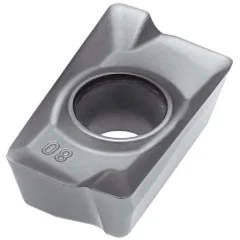


Cutting inserts
Cutting inserts are carbide tools designed for machining. They are used in folding tools such as lathe knives, milling heads, folding cutters, folding countersinks and folding drills. The cutting inserts are made of powder steel by powder metallurgy. By application, forked inserts can be divided into: turning inserts, milling inserts, chipbreakers and support inserts. Lathe inserts are designed for folding lathe knives, in which the blade from the insert is the interchangeable part.
-
- Categories
- Threading
- Milling
- Hole tools
- Drills
- Drills (32)
- Reamers
- Dredgers
- Measuring tools
- Multi-cutting inserts
- Machine tooling
- Turning
These inserts usually have multiple cutting blades hence the name cutting inserts. Inserts for folding lathe knives come in many shapes, for example, there are triangular, square or rhombic inserts. Each insert shape has its own letter designation, for triangular inserts - T, square inserts - S, rhombic inserts - C and many others.
Millingcutting inserts are tools designed to work with folding tools such as milling heads, folding cutters or folding countersinks. It is possible to use these inserts in other tools, while the principle must be observed that it is a tool for replaceable inserts.
Triangular inserts without chipbreaker TPKN 1603 or 2204 PDR right-hand cutting inserts are most often used for milling heads. These are cutting inserts for milling cutterheads of the model according to Dolfamex 220.17, which are intended for surface planing by roughing or medium fine and also finishing. Another group of milling tools where inserts are used are folding milling cutters, which are similar in construction and application to finger milling cutters.
To reduce material consumption and lower costs, folding milling cutters can be used with replaceable inserts. The most common inserts for finger milling cutters are APKT 1003 or APKT 160408. These are rectangular inserts for profile milling, roughing, pocketing or roughing corners.
Milling cutting inserts come in many grades and coating versions. However, each manufacturer has its own internal designation of insert grades, chipbreakers and the PVD or CVD coatings assigned to them. However, each manufacturer categorizes insert grades according to ISO designations, which specifies what type of material each insert is intended for. According to ISO, materials have the following designations: P - steel with a blue color ,M - stainless steel with a yellow color, K - cast iron with a red color, N - aluminum with a green color, S - heat-resistant materials with a honey color, H - hardened steels with a gray color.
What kind of cutting inserts to choose?
Carbide cutting inserts are made by sintering carbides of hard-to-melt metals such as tungsten or titanium with bonding metals (the most common is cobalt, sometimes to reduce the cost of production it can be nickel or vanadium). The abbreviation VHM (from the German Vollhartmetall) is used to describe tools made entirely of carbides.
This website uses its own and third-party cookies to improve our services and show you advertising related to your preferences by analyzing your browsing habits. To give your consent to its use, press the Accept button.